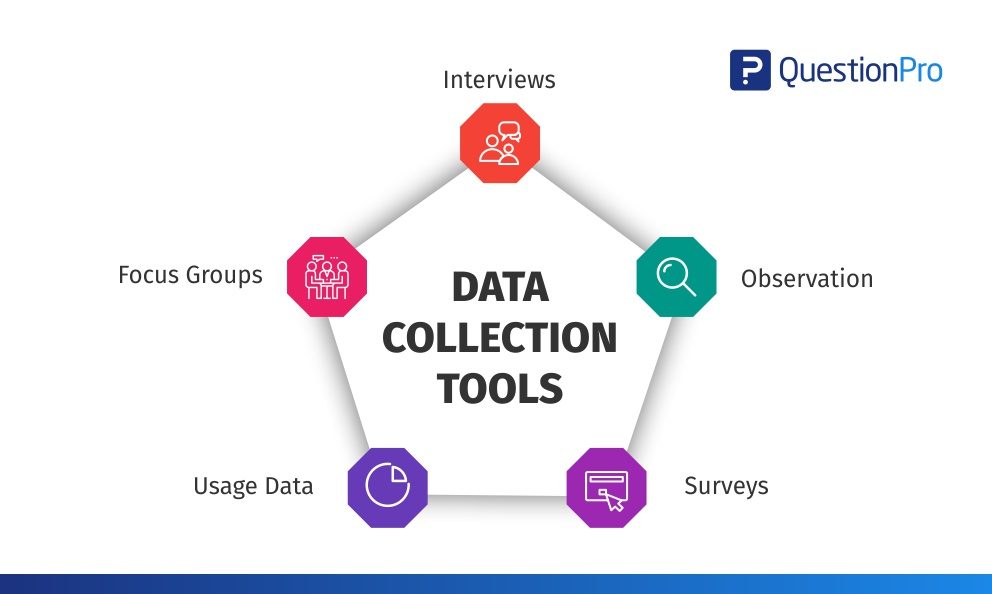
Data collection is the process of gathering and measuring information on variables of interest, in an established systematic fashion that enables one to answer stated research questions, test hypotheses, and evaluate outcomes.
Example: Nevertheless, this essay will draw on accounts that refer to different methods of DATA COLLECTION, as mentioned above and will acknowledge the fact that generalizations could be made only in the researched context.
fr: Collecte de données
Experimental research.
Experimental research, also called experimentation, is research conducted using a scientific approach using two or more variables. ... The success of experimental research usually confirms that the change observed in the variable under study is solely based on the manipulation of the independent variable.
Example: EXPERIMENTAL RESEARCH Recent work in the new field of experimental philosophy has taken an empirical approach to testing the claims of contextualism and related views.
fr: Recherche expérimentale.
Generalization
the act of forming conclusions from a small amount of information. 2 : a general statement : a conclusion based on only a small number of items or instances. generalization. noun.
Example: There are many advantages of neural networks such as machine learning, GENERALIZATION, adaptation and fault tolerance.
fr: Généralisation
Measurement
Measurement is defined as the act of measuring or the size of something. An example of measurement means the use of a ruler to determine the length of a piece of paper.
Example: Novel technologies in mechanical weed control New technologies have been trialled in weed management, including laser weed MEASUREMENT and cutting (Heisel et al, 2002) and microwaves (Sartorato et al, 2006).
fr: La mesure
Reliability
Reliability is defined as the probability that a product, system, or service will perform its intended function adequately for a specified period of time, or will operate in a defined environment without failure.
Example: The use of formal methods for software design is motivated by the expectation that, as in other engineering disciplines, performing appropriate mathematical analyses can contribute to the RELIABILITY and forcefulness of a design.
fr: Fiabilité
Research Design
The research design refers to the overall strategy that you choose to integrate the different components of the study in a coherent and logical way, thereby, ensuring you will effectively address the research problem; it constitutes the blueprint for the collection, measurement, and analysis of data.
Example: The above discussions suggest that defining epistemology and adopting the views of most feminist that research should start from women's experience within a social context will influence the RESEARCH DESIGN process. 4.0 Power and Ethic in the research process Ethics and Power Ethics concerns the morality of human conduct.
fr: Conception de la recherche
Survey research
Survey research is defined as "the collection of information from a sample of individuals through their responses to questions" (Check & Schutt, 2012, p. 160). This type of research allows for a variety of methods to recruit participants, collect data, and utilize various methods of instrumentation
Example: One of the most significant criticisms of SURVEY RESEARCH is that it provides only a very shallow level of information that is not always particularly valid.
fr: Recherche par sondage
Validity
Validity is the quality of being correct or true. When a statement is true and has a lot of evidence backing it up, this is an example of a situation where the evidence supports the validity of the statement.
Example: Overall the regression run above explains the determinants of exam performance, and there is both statistical evidence to support its VALIDITY and an intuitive explanation, describing the effect of the explanatory variables on exam performance, qtmark in this case.